Weekly News Review: What do we learn from the June by-elections?

The June by-elections have come and gone and, as expected, Zanu PF won all sixteen seats on offer. Naturally, Zanu PF is very pleased with the outcome and they are in celebratory mode, even though they know that in the absence of their main rival, they really were competing against themselves – a contest they were destined to win all the time. The major opposition, the MDC, boycotted
the by-elections, citing an unfair electoral landscape. The MDC argues that they will not compete in any elections until reforms have been carried out. But now that it’s finished, it’s important to take stock and glean what lessons we can learn from the by-elections. Below, we analyse a selection of some key lessons and confirmations which the by-elections have provided.
Electoral Landscape Remains Unfair
The by-elections have reminded us, once again, as if we needed reminding, that when facing a serious challenge, Zanu PF will resort to its usual underhand tactics in order to prevail. While Zanu PF almost had a walkover in most of the constituencies, the story was different in Hurungwe West, where it faced its former MP, Temba Mliswa, who put up a spirited fight against the might of the state.

Hurungwe West became a microcosm of Zimbabwe during an election period. There was everything that normally manifests in a typical Zimbabwean election – voter intimidation, marshalling of traditional leaders, deployment of state security structures, violence against voters, arrests and detentions of the opposition candidate and his campaign officers, unfair and biased media coverage, vote buying, and much more – all in favour of Zanu PF. Everything was done to cripple and derail Mliswa’s campaign. Zanu PF knew he had a chance and the might of the state was used to thwart him.
The irony is that Mliswa used to be a beneficiary of the same system and its style when he was the candidate for Zanu PF less than two years ago. Then, he was the provincial chairperson of Zanu PF but now he was the victim. Hurungwe West confirmed that when faced with a real threat, Zanu PF goes into default mode and Mliswa came face to face with the same system that had once supported him and witnessed its viciousness from the other side.
In the end, almost everything that the MDC had complained of, was on show in Hurungwe West. If anything, Hurungwe West represented a vindication of the MDC’s boycott as it demonstrated that Zanu PF was not ready for fair play in elections. Hurungwe West taught us that the electoral system was still heavily tilted in favour of Zanu PF, to the detriment of other political parties.
Voters’ Determination
However, Hurungwe West also provided a lesson to the MDC, even though it was not participating in the election. The lesson is that if people are really determined to make their voices heard, they will not be easily cowed, even against a vicious system. Mliswa might have lost the election but it was close (5961 to 4239 votes) indicating that if Zanu PF had not resorted to its dirty tricks, he would most likely have prevailed. The people of Hurungwe West showed bravery and determination, although in the end their efforts were in vain. There is certainly a positive to be gained from this loss.
Mliswa barely had room and opportunity to campaign in the constituency. He was arrested and detained on flimsy grounds. His supporters were haunted by the ruling party and state machinery. But they still came out in their thousands to vote for him, demonstrating their resilience in the face of heavy political intimidation.
 But Mliswa was alone, fighting as an independent candidate, without party machinery and one can only imagine what he might have achieved if he had the backing of a solid political party?
For the MDC, the message from the voters of Hurungwe West is that even in an unfair electoral landscape, when people are determined and mobilised, they will not hesitate to demonstrate their political choice.
Low Voter Turnout: Boycott or Apathy?
Granted, voter turnout in by-elections are usually on the low end compared to turn-out at general elections, but even on this occasion, a general look at the figures suggests that the turnout was excessively low. It’s clear that most voters chose to stay away. There was a lot of hype around the by-elections and it’s not often that the country holds by-elections in 16 constituencies simultaneously. Even the Vice Presidents of Zanu PF took the opportunity to traverse the country, addressing rallies in the different constituencies as they sought to build their own profiles with an eye at the succession race.
But the turnout was so low that in some constituencies the winning Zanu PF candidates got lower numbers than they got in the July 31 elections in 2013. In Makokoba, where Tshinga Dube finally won after failing in two previous attempts, he got 3182 votes in the by-election. In the 2013 elections he had received more votes at 3,539 votes. The winner then was Gorden Moyo, then of the MDC-T, who had received 7,099. At less than 4,000, the total number of people who voted in the by-election in Makokoba is far less that the number of people who voted for the winner in 2013. But what do we learn from the low voter turn-out in the by-elections? It could signal at least two things:
Heeding the Boycott?
First, it could mean that the majority of the voters heeded the MDC boycott campaign. Certainly the figures in Makokoba, which we have used above appear to demonstrate that the 7,000 voters who voted for the MDC candidate in 2013 chose to stay away. Tshinga Dube’s votes were actually less than his tally in 2013, although they were within the range of what might be regarded as natural Zanu PF supporters. He didn’t gain any more votes. The rest of the candidates got very small and inconsequential numbers.
It could therefore mean that most MDC supporters, especially in their urban strongholds, listened to their party and chose to stay away. This is the view that the MDC has naturally taken as they see the low turnout as an affirmation of their boycott. In this regard, it might be said that the MDC participated in the election through the boycott, with the large number that chose to stay away being a vote of no confidence in the election. In this regard, the MDC would quite rightly claim something of a victory.
Voter Apathy?

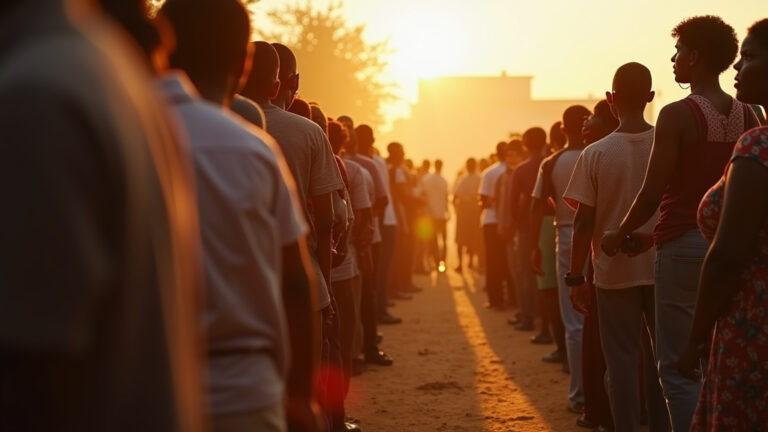
Second, however, the low voter turnout might also represent voter apathy which has creeped into the electorate as people gradually disengage from politics and concentrate on day-to-day survival needs. Media reports indicated that people were busy pursuing their business on polling day leaving most polling stations deserted for much of the day, especially in urban constituencies.
All this could simply mean that people have lost interest and trust in politics and politicians. Zimbabweans are probably tired of politics, which does not seem to be bringing any solutions to their daily challenges. They don’t see voting making any difference for them. They have gone through many elections in the last fifteen years but none of them has brought any positive change in their lives. They don’t see the point of politics and elections. They have probably lost faith in politicians.
In this regard, we must recall the results of the Afrobarometer Survey (2014) which showed that the majority of Zimbabweans place their trust in religious leaders. The same survey indicated that opposition parties are the least trusted institutions. We interpreted this survey as demonstrating, among other things, that Zimbabweans had become disillusioned with politics and political leaders and instead now look to other sources for salvation, including divine intervention. This might explain why religious leaders are enjoying greater levels of trust. Indeed, there has been a sharp rise in recent years in the popularity and following of charismatic Pentecostal preachers, some of whom are referred to as Prophets.
The low voter turnouts might both be due to the boycott and to apathy, but the problem is that political parties might struggle to pull people back into politics once they have disengaged.
Small opposition parties
This election has demonstrated that while it is everyone’s right to form a political party and to contest elections, there are really still only two major political parties in Zimbabwe – Zanu PF, which contested, and the MDC, which did not contest. Those are the only two parties with significant parliamentary and local authority representation in the country. Most of the rest are in the lightweight division and in this case, only served to legitimise an otherwise hollow process.
A multitude of political parties and independents chose to contest in this election, defying the MDC’s call for a boycott. They sensed an opportunity in the absence of the MDC and thought they could seize it to their advantage. But as it turned out and not at all unexpectedly, most of them were thoroughly humiliated. Some could only scrap as little as 30 votes, a disappointing return after all the investment in the campaign. This should have taught them some important lessons about the electoral process.
The biggest losers among them, in my opinion, would have to be Zapu and the NCA. Zapu has older and more established historical roots and might have been expected to fare better in Bulawayo and Matabeleland, but not only did it fail to win a single seat, but it also performed quite dismally. In the past it might have been thought that Zapu lost voters to the MDC. However, in an election when the MDC was not contesting, it still performed badly.
It will be difficult for Zapu to recover from this poor performance and for the much-respected veteran politician, Dumiso Dabengwa to make a serious case for leadership should there ever be grand coalition talks. One feels for Dabengwa, a dignified old revolutionary who has recovered his principled stand in the latter phase of his career, after his stint in government after the Unity Accord. He remains an important political character in the nation, but his party’s performance in these by-elections has not done him any favours.
The NCA on the other hand is a relatively new political actor which transformed from a civic society organisation. Its sterling work in constitutional advocacy in its former life will always have a special place in the history of the nation, but as a political party, these by-elections have demonstrated once again that this is not its terrain.
It’s cold and miserable outside the main political parties
This by-election has shown once again that it’s very cold and miserable outside the agency of political parties and that as a general rule, voters follow parties and not the individual candidates. Apart from Margaret Dongo whose ground-breaking challenge against the system and victory as an independent in 1995 and Professor Jonathan Moyo’s success in the 2005 and 2008 elections and more recently Jonathan Samkange’s victory as an independent in 2013 there have not been any notable electoral victories by independent candidates.
The general trend has been that each time a candidate has left one of the main political parties, he has discovered at great cost, that with very limited exceptions, in parliamentary elections people often follow the party and not the individual candidate. Mliswa might have followed Dongo and Moyo as exceptions but for the might of the state that he came up against. But he too realised in light of the treatment he received from his former party that life is very hard outside the agency of the political party. Indeed, a few times he expressed frustration at the failure by his colleagues, including Joice Mujuru to back him and others in their time of great need.
But the most vivid illustration is to be seen in the case of Albert Mhlanga, former MP for Pumula constituency in Bulawayo. In the 2013 elections, when he stood for the MDC-T, Mhlanga polled 6,100 votes to win the contest. In 2014, Mhlanga left the MDC-T and joined the MDC Renewal Team. He was subsequently expelled from parliament along with other MPs who had joined the MDC Renewal Team. When the by-election was called, he chose to stand as an independent, as the MDC Renewal also boycotted the elections. Mhlanga must have thought he would prevail in spite of having left the MDC-T or his new party not contesting in the by-election.
However, he got the shock of his life as the result was rather embarrassing. He managed a paltry 134 votes, down from the 6,100 votes that he had enjoyed barely two years ago. He lost to a candidate who could not even win half the votes that he had gained in 2013 as Godfrey Malaba, the Zanu PF candidate earned 2,477 votes to claim victory.
Mhlanga’s case showed once again that political life outside the two major political parties is almost impossible. It should serve as a reminder to the remaining MPs and others that as a general rule they are not bigger than the political parties they represent. We will never know how the MPs who went to the MDC Renewal Team would have fared as the party chose to boycott the by-election, but if Mhlanga’s case is taken as an indicator, then the picture is very gloomy indeed.
Façade of Democracy
A few days ago when we wrote on why Zanu PF was taking by-elections seriously, one point we should have emphasised was that regimes like the one that Zanu PF runs are very fond of elections as they provide legitimation for their rule. Even authoritarian regimes like North Korea hold elections. Elections are a ritual that provides a façade of legitimacy. The by-elections showed yet again that the Zanu PF regime places a high premium on the election routine. In this regard the absence of the MDC on account of its boycott did not matter because a plethora of small opposition and independent candidates participated. In doing so, they provide a façade of democratic competition. If the main opposition boycotts, Zanu PF will create the necessary competition to provide this façade of democratic contestation.
Life goes on

We learn, once again, that a sense of shame departed from Zanu PF a long time ago. They just don’t care. The MDC boycott certainly annoyed them but they have not allowed it to dampen their celebratory mood. They took the campaign seriously and they have celebrated the victory in equal measure.
For them, life goes on. Political chancers have found way into Parliament. In fact, to demonstrate their arrogance, they even took the opportunity to fire three more MPs on the day of victory, triggering new by-elections. Their message to the MDC in this regard is that we don’t care that you are boycotting elections, we will still hold them without you. And this is where the biggest lesson for the MDC lies.
Moyo, the big winner
  The biggest winner in this set of by-elections has to be Professor Jonathan Moyo, and not just because he got a lot of votes but because of what his victory represents for him in the succession dynamics in Zanu PF.
The 2013 elections had been bitter-sweet for Moyo. He had been hailed for his work in President Mugabe’s campaign but he had lost his own seat in Tsholotsho North. People may not realise it but while elections are a party affair, they are also very personal. When you lose, it’s not just the party that suffers. The person who has lost suffers terribly. Even his family suffers too. It is a personal blow and Moyo would have felt it, even though the party’s presidential candidate had prevailed. It would have hurt badly. He tried legal action but it failed.
There is a theory, which is not implausible, that his ignominious defeat in 2013 was the work of internal party rivals out to embarrass him. A loss would humiliate and keep him down. For a man who must also have ambition, and who rates himself very highly among Zanu PF politicians, losing his seat would have hurt badly. How do you make a claim to higher office if you cannot win your own constituency?
This had always been Mnangagwa’s handicap as he kept losing the Kwekwe constituency to MDC’s Blessing Chebundo, until he eventually took leave and found comfort in the rural seat of Chirumanzu-Zibagwe. Losing the constituency twice must have hurt not only his ego but his own presidential ambitions. Likewise, Moyo’s defeat in 2013 would have been a very sore point for him, a big wound on his ego, which is why the opportunity of the by-election was a God-send. It was the proverbial manna from the Heavens.
Although Mugabe had appointed Moyo as Information Minister on the basis of a constitutional rule which permits the President to appoint a limited number of Ministers from outside Parliament, this was always seen as a rescue of a man who had fallen off the electoral cliff. In politics, every serious politician wants to be elected, not to be gifted roles. A mandate from the people is very important – it gives you power. You are always reminded of your smallness if you are unelected. Ironically, it was Moyo himself who has been keen to remind us that the Vice Presidents are unelected, but mere appointees of the President, which he also was until this by-election victory. But it explains why Moyo was delighted when the opportunity for another election arose.
And he literally threw the kitchen sink at his small rivals, running a thorough campaign. But why would Moyo have employed the proverbial sledgehammer to hit tiny flies? At least two reasons – first, he had to make sure. If you have been bruised once, you can’t take things for granted. But more importantly, this was a fight against his internal rivals. For Moyo, victory was not enough – he needed to win big and send a clear message to his internal rivals, and those who may have been mocking him for being an unelected Minister, that indeed whatever they had done in 2013, he was still a force to reckon with.
This he did, winning with 11,695 votes while his rivals got less than 100 votes each. Busani Ncube got 91 and Getrude Sibanda got 38. Moyo called it a ‘landslide’ on Twitter and thanked his party superiors but it was a reminder to internal rivals that he was back with a huge bang. No serious politician wants to live at the benevolence of their leader. Moyo would have been mocked by rivals on the basis that he was not actually an MP but that he had been rescued by the President.
Now, though, they can’t say that anymore. His victory has shut them up. And this is why he has to be one of the biggest winners in this by-election. It was more than a by-election. The irony is that the MDC had allowed him an easy run in the 2008 election when they did not field a candidate, believing him to be a new-found ally, only to turn against them soon after and now again, it is the MDC’s their expulsion of MPs and subsequent boycott that allowed Moyo another easy run.
Has the boycott worked?
For the MDC, there are two other important points to take away from this episode:
First, to use the wisdom of the ancestors, if you are going to eat a dog, pick the big bulldog. Go for the big one. In other words, do not do half-measures. In other languages, they say you cannot have your cake and eat it at the same time. The MDC chose not to participate in the by-elections, but by submitting nominations to fill the proportional representation seats, they effectively undermined the political value of the boycott argument. This was never about the law, never about the technical difference of PR seats being based on the 2013 results, no. This was about taking part in or boycotting all electoral processes as a protest against lack of reforms. Submitting names for PR seats to fill vacancies arising from the expulsion of MPs is effectively participating in electoral processes that you are protesting against. There was no need.
In fact, the MDC just lost an opportunity – because there is no other way to fill those PR vacancies, they would have been left vacant by virtue of their refusal to fill them, making the MDC’s point even stronger in the court of public opinion apart from showing the world that the party was serious about the boycott. It would have created a crisis for parliament and government, exactly what a boycott is supposed to do. But by filling those uncontested vacancies and boycotting the contested vacancies, it is diluted the party’s otherwise strong argument for reforms. It made it look like the party was only interested in rewarding its senior leaders by awarding them uncontested PR seats while avoiding the contested by-elections.
The second big lesson must be that an election boycott on its own, without a supporting strategy, does not work effectively. Naturally, the MDC would like to emphasise and celebrate the notion that their supporters heeded their call, but the million-dollar question is, to what end? Has it affected the legitimacy of the by-elections? This is difficult to say but even if it has, so what? Will it have the intended effect of forcing the Zanu PF government to reform the electoral landscape?
I am not sure staying away from the election on its own has achieved the intended objective. If anything, by triggering new by-elections on the day that they won the by-elections, Zanu PF have stuck up a finger in the MDC’s face and said they will go right ahead, without the MDC or reforms. The MDC leadership needs to go back to the drawing board and figure out what else they can do apart from boycotting, to achieve reforms. This, for me, is probably the most important lesson from these by-elections.
waMagaisa
Note: This content is exclusive to this website and should not be used in any publication without prior express permission.  wamagaisa@yahoo.co.uk Â
Editors: In the past, I have generously allowed free access to my material. This policy is undergoing change. The above statement applies as much to you as to anyone else. Please respect my copyright. If you wish to use material from this website, please contact me. Â