
Alex T. Magaisa
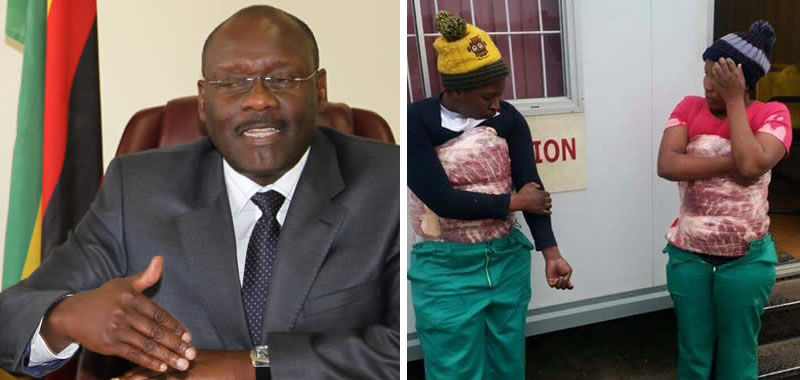
The man in the first picture is called David Parirenyatwa. He is the country’s Minister of Health, a medical doctor. A few weeks ago, it was disclosed that he had been overpaid a total of $77, 000 by PSMAS, the medical aid society which is struggling to meet members’ needs and to pay doctors and other creditors.
A few weeks ago, a family member suffered a serious accident, one of the many that happen on the poor roads of Zimbabwe. He had several injuries, head injuries, broken ribs and his spine narrowly survived serious damage. It took 8 hours to transport him from Chivhu to Harare’s Parirenyatwa Hospital, the Government medical facility that bears the name of the father of the current Minister. When he arrived, they needed several hundreds of dollars to “top up” on PSMAS’s contribution. My uncle has been a teacher since 1984, a loyal civil servant who has invested in PSMAS for several years to ensure treatment in situation like that one. But he was almost denied treatment, until the cash demanded had to be sent by relatives overseas. What choice did we have?
Parirenyatwa does not deny that he was overpaid by PSMAS. But he has a strange explanation for it. He calls it “capitation”, which he says is common in the insurance industry. He doesn’t explain why this “common practice” does not apply to other doctors, his peers, who are owed huge amounts of money by PSMAS. Or why a medical insurance company that is failing to pay all other doctors and service providers is still able to overpay one doctor by a whooping $77,000, the one doctor who also happens to be a Minister of Government and the Health Minister. It defies common sense, let alone a sense of fairness or sense of the business variety.
But Parirenyatwa is an important man and most people suspect something fishy went on in this transaction. His Ministry exerts some control over PSMAS, which overpaid him. It is highly probable that there was improper use of the position of trust held by the Minister in order to gain this unfair advantage not only over PSMAS but also over his peers in the medical profession, who remain unpaid.
Is Parirenyatwa in trouble for this dodgy transaction? Not really. Has he been publicly paraded with his loot? No. He is an important man. Even the Presidential health advisor, Timothy Stamps has come out in his defence. He says it’s all proper, there is nothing wrong. $77,000 in the pocket. They say it’s okay.
In any other civilised country, where rules and standards of human decency are applied, Parirenyatwa would at least have been called upon to account for himself. He would be probed by his boss, by Parliament, by civil society watchdogs and by the media. There would be pressure on him to account, and possibly to resign.
The other picture is of two women whom social media says work for a meat processing business somewhere in Harare. (Some say the picture is from South Africa, but no matter, as their situation is representative of the plight of many in their position in Zimbabwe today.) Apparently, they were caught red-handed, well, meat-strapped, really. That is not a fashion statement there. They invented this ingenious method to steal meat from their employer. But this time, they were not so lucky. They are not alone.
So here there are, paraded for the whole world to see. Humiliated. You laugh at first, then you feel sad. You feel sad, as the reality sinks in. These women are not likely to be common criminals. They are mothers, sisters, people responding to a dire economic situation. But here they are – paraded before the world. Before us, the social media version of the lynch mob. Battered and broken. Truth is, whatever the origin of the pictures, they are representative of the many small people around Zimbabwe, people who have had to resort to all sorts, including stealing in order to survive.
But, here we are – in this world, it is the small people who always get humiliated. The rich and powerful? Well, life goes on. The jails of Zimbabwe, and maybe many other countries, are filled with men and women like those two women in the picture – petty criminals who are probably forced into petty theft not by greed but by the sheer need to survive. But the really big men and women who take advantage of the system, and make huge amounts of money in the process simply walk away and pretend as if nothing’s happened. It is the same in Zimbabwe, as it is in many other countries.
A tale of two nations, indeed.
waMagaisa

Lets not forget that in order to qualify to be part of Mugabe’s inner circle you need to be of questionable integrity. If you are squeaky clean you do not stand a chance of making it into cabinet because you would be like Nkosana Moyo who was actually able to resign. Mugabe loves the tainted so they can be kept in line.